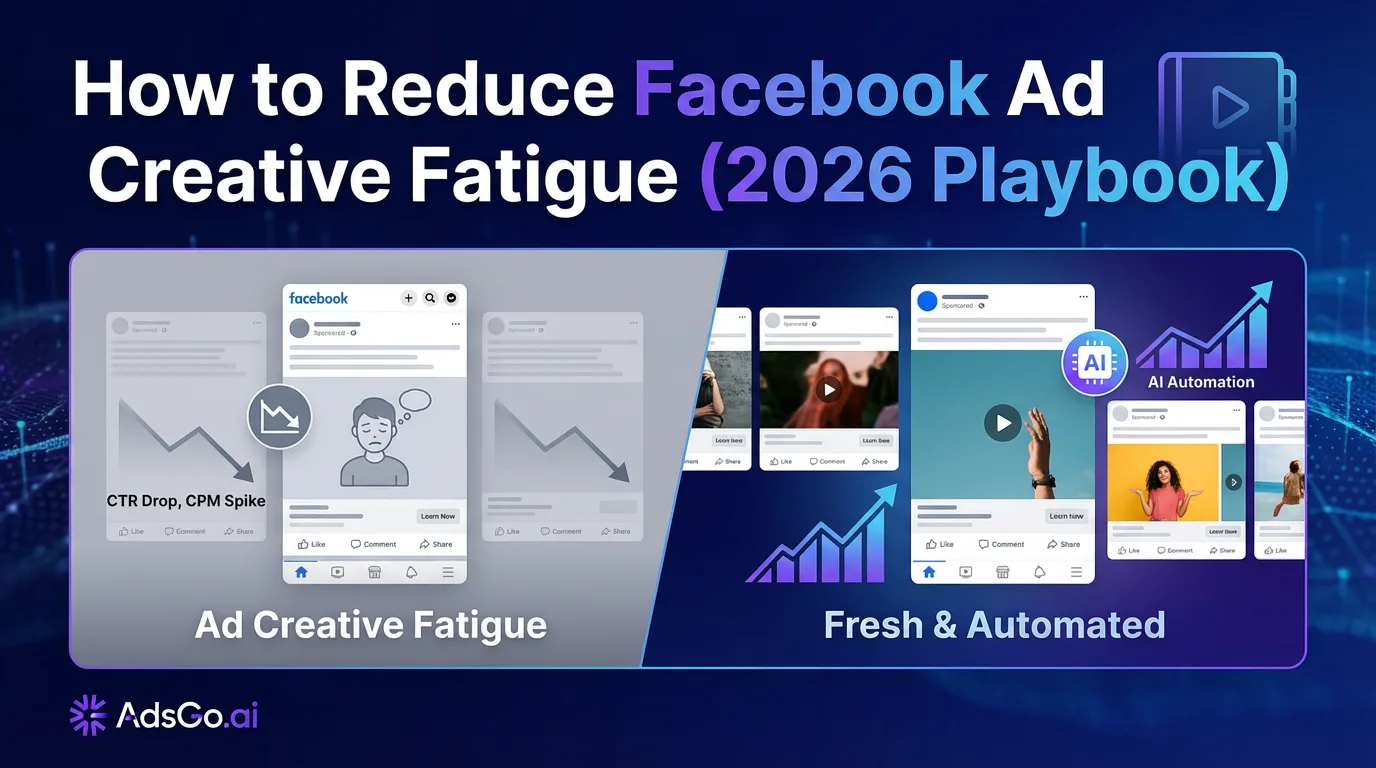

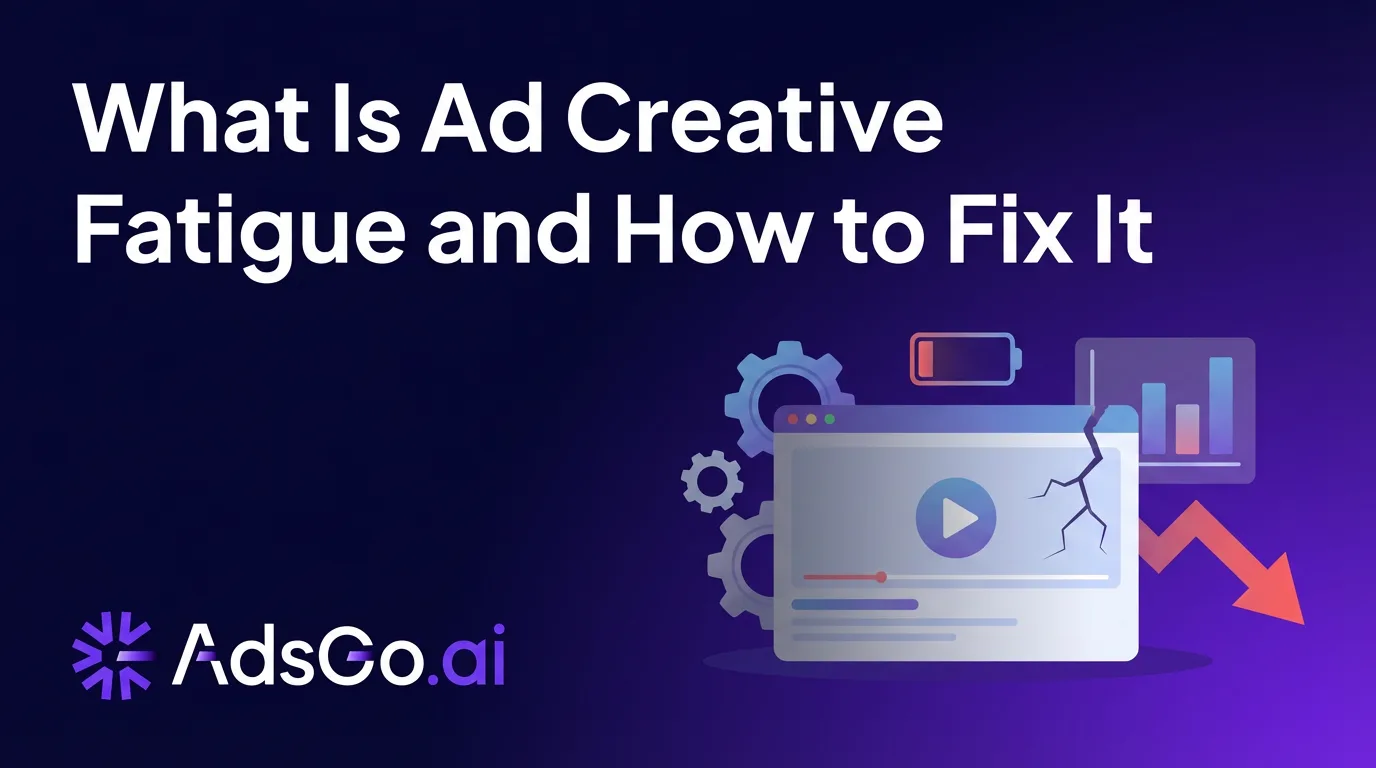
Ad creative fatigue is the gradual decline in ad performance that occurs when the same audience sees the same ad too many times. Users stop noticing the ad — or worse, start actively ignoring it — causing click-through rates to drop, costs to rise, and your return on ad spend to deteriorate.
It's one of the most common reasons Facebook ad campaigns lose momentum, and it happens to every campaign eventually. The question isn't whether your creatives will fatigue — it's whether you'll catch it early enough to act before it drains your budget. In this guide, we'll explain exactly what causes creative fatigue, which metrics signal it first, and how to quickly diagnose whether a performance dip is really fatigue or something else entirely.
What Causes Ad Creative Fatigue?
The Psychology Behind It
Creative fatigue is driven by a psychological phenomenon called ad blindness — the brain's natural tendency to filter out repeated stimuli. After a user has seen your ad 3–5 times, it registers as "already seen" and gets subconsciously filtered out, just like banner ads on a website you visit daily. (Source: Nielsen Norman Group, Banner Blindness research)
Factors That Accelerate Fatigue
Several factors accelerate how quickly fatigue sets in:
- Small audience size — A $10K/month budget targeting 200K people will burn through the audience far faster than the same budget targeting 2M people. Fewer unique users means higher frequency per user.
- High daily spend relative to audience — Even large audiences fatigue quickly when daily budgets are aggressive. If you're reaching 50%+ of your audience weekly, fatigue will arrive within 7–10 days. (based on AdsGo internal campaign data)
- Single creative per ad set — Running one ad forces Meta to show the same creative repeatedly. Meta recommends 3–5 ads per ad set to give the algorithm options. (Meta best practice recommendation)
- Limited format diversity — An audience that sees only static image ads fatigues faster than one seeing a mix of static, video, carousel, and UGC-style creative. Different formats engage different user attention patterns.
- Non-skippable placements — In-feed placements where users scroll past quickly fatigue slower than placements like in-stream video where users are forced to watch. Forced exposure accelerates the "already seen" effect.
Early Warning Signs: Which Metrics Predict Fatigue?
The biggest mistake advertisers make is waiting for ROAS to drop before reacting. ROAS is the last metric to fall. By the time ROAS declines, you've already been overspending for 3–5 days. Here are the metrics that predict fatigue, in the order they typically appear:
1. Frequency Rising Above 2.5
Frequency is the average number of times each person in your audience has seen your ad. It's the earliest and most reliable fatigue predictor. When frequency crosses 2.5, engagement rates begin declining across most industries.
| Industry | Frequency at Fatigue Onset |
|---|---|
| Ecommerce | 2.0 – 2.5 |
| SaaS / B2B | 3.0 – 3.5 |
| Local Services | 2.5 – 3.0 |
| Education | 2.8 – 3.2 |
| Finance / Insurance | 3.2 – 3.8 |
B2B audiences tolerate higher frequency because the purchase decision involves more touchpoints. Ecommerce audiences fatigue fastest because impulse-purchase decisions are made quickly — once the user has decided not to buy, repeated exposure is pure waste.
2. CTR Declining from Baseline
Track your creative's first-week average CTR as the baseline. When the 3-day rolling average CTR drops 15%+ below that baseline, fatigue is setting in. CTR decline happens 3–5 days before ROAS drops, giving you a critical window to prepare replacement creatives.
3. CPM Rising While Engagement Falls
Meta's algorithm deprioritizes ads with declining engagement. As fewer users interact with your fatigued creative, Meta needs to show it to more people (or in more expensive placements) to hit your budget — driving CPM up. Rising CPM combined with falling CTR is a confirmed fatigue signal.
4. Negative Feedback Increasing
In Ads Manager, check for increases in "Hide Ad" actions and negative feedback scores. Users actively hiding your ad is a strong signal they've seen it too many times. This metric often spikes before CTR drops, making it an excellent early warning for retargeting campaigns with inherently high frequency.
Quick Diagnosis: Is It Really Creative Fatigue?
Key Metrics to Check
Not every performance decline is creative fatigue. Before replacing your creatives, run through this diagnostic checklist to confirm the root cause:
When to Take Action
Run through this diagnostic checklist before making any changes to determine whether intervention is actually needed.
- Is frequency above 2.5? If frequency is low, the problem isn't overexposure — look at audience targeting or bidding instead.
- Has CTR dropped 15%+ from its first-week baseline? If CTR is stable, your issue is post-click (landing page, offer) not pre-click (creative).
- Is the decline gradual over 1–3 weeks? Fatigue is gradual. Sudden overnight drops point to bidding changes, policy issues, or competitive shifts.
- Is the creative more than 14 days old? Fresh creatives rarely fatigue. If a creative has been live less than 10 days with declining performance, the problem is likely creative quality — not fatigue.
- Are multiple creatives declining at the same time? If every creative in an ad set is declining simultaneously, it's probably audience saturation, not creative fatigue. The fix is audience expansion, not new creatives.
- Is the decline limited to specific ad sets? If performance is dropping account-wide across different audiences and creatives, look at external factors: seasonal trends, iOS privacy changes, or algorithm updates.
If 4+ items are checked, creative fatigue is your primary issue. Proceed to our detailed fix-it guide below.
What to Do When You Confirm Creative Fatigue
Short-Term Fixes
This article is designed to help you understand and diagnose creative fatigue. For the complete step-by-step solution — including rotation schedules by budget level, the Creative Ladder method, refresh-vs-replace frameworks, and AI-powered automation — read our in-depth companion guide:
How to Reduce Facebook Ad Creative Fatigue (2026 Playbook) →
Long-Term Prevention
That guide covers:
- The exact rotation intervals based on your monthly spend and audience size
- How to diversify across creative formats to extend lifespan by 40%
- The "refresh instead of replace" technique that recovers 78% of lost CTR
- How to use AdsGo Auto-Creative to automate fatigue detection and creative rotation
If your diagnosis reveals that the problem is not creative fatigue but rather a broader ROAS issue, start with our guide to improving Facebook Ads ROAS instead — it covers the full diagnostic framework across all four root causes of declining performance.
Ready to Launch Smarter Campaigns?
How AdsGo Detects Creative Fatigue Automatically
Automated Creative Rotation
Monitoring frequency, CTR trends, and CPM across every creative in every ad set is tedious and easy to miss — especially when managing multiple accounts. AdsGo's Auto-Creative feature automates fatigue detection by:
AI-Powered Optimization
AdsGo AI automates several key parts of this optimization workflow, removing the manual effort that slows most teams down.
- Tracking frequency and CTR trend lines in real time across all active creatives
- Triggering alerts at your custom fatigue thresholds (default: frequency > 2.5, CTR decline > 15%)
- Predicting fatigue onset 2–3 days before it impacts ROAS using machine learning on historical creative performance patterns
- Recommending rotation timing and creative format based on your audience size and spend level
Detect creative fatigue automatically with AdsGo →
FAQ
How do I know if my ads have creative fatigue?
Check three metrics: frequency (above 2.5), CTR (declining 15%+ from first-week baseline), and CPM (rising while engagement falls). If all three signals are present and the decline is gradual over 1–3 weeks, creative fatigue is the most likely cause. If frequency is low or the decline is sudden, look at other factors like bidding changes or audience saturation.
How often should I change my Facebook ad creatives?
Most accounts should rotate creatives every 7–14 days. Higher-spend accounts ($20K+/month) may need rotation every 5–7 days, while lower-spend accounts can extend to 14–21 days. Rather than following a rigid schedule, monitor frequency and CTR to time rotations based on actual performance data. For specific rotation schedules by budget level, see our complete creative fatigue playbook.
What's the difference between creative fatigue and audience saturation?
Creative fatigue means your audience is tired of seeing a specific ad — different creatives would still perform. Audience saturation means you've reached everyone in your target audience — no creative will perform well until you expand targeting. The key diagnostic difference: if one creative declines while others in the same ad set remain healthy, it's creative fatigue. If all creatives decline simultaneously, it's likely audience saturation.
Can AI prevent creative fatigue before it happens?
AI can't prevent fatigue entirely — it's an inherent result of repeated exposure. But AI tools like AdsGo Auto-Creative predict fatigue onset 2–3 days early based on engagement trend analysis and trigger rotation before ROAS is impacted. In our testing, AI-managed creative rotation reduced average CPM by 23% and improved 30-day ROAS by 18% versus manual rotation.
Can I just change the thumbnail instead of making a whole new ad?
Yes — swapping the first frame of a video or the hero image of a static ad often resets performance for 5-7 days. It's the fastest way to buy time while your team produces fresh creative.
Want to see how AI handles this automatically? AdsGo AI manages your Google and Meta ads end-to-end — no experience needed.